Tennis and Golfers Elbow Explained

Tennis Elbow (Lateral Epicondylitis)
Location: Outer (lateral) side of the elbow.
Cause: Overuse or repetitive strain of the extensor muscles of the forearm, especially where they attach to the lateral epicondyle (the bony bump on the outside of the elbow).
Typical Movements that Trigger It:
Backhand tennis strokes (hence the name).
Repetitive gripping, lifting, typing, or using tools.
Symptoms:
Pain and tenderness on the outside of the elbow.
Pain when extending the wrist or gripping objects (e.g., shaking hands, turning a doorknob, lifting a kettle).
Golfer’s Elbow (Medial Epicondylitis)
Location: Inner (medial) side of the elbow.
Cause: Overuse or repetitive strain of the flexor muscles of the forearm, especially where they attach to the medial epicondyle (the bony bump on the inside of the elbow).
Typical Movements that Trigger It:
Golf swings (especially repetitive wrist flexion).
Throwing sports, weightlifting, or repetitive gripping motions.
Symptoms:
Pain and tenderness on the inside of the elbow.
Pain when flexing the wrist, squeezing objects, or twisting the forearm.
How to treat Epicondylitis?
Step 1. Activity Modification
- Stop or reduce the aggravating activity
- Avoid sharp pain, however don’t completely immobilize the arm
Step 2. Pain Management
- Remedial Massage to help relieve muscle tension and promote healing.
- Apply ice pack to help reduce inflammation
- Ibuprofen can help reduce inflammation (speak to your doctor first)
- Elbow and/or wrist braces can help support and limit your movement to prevent pain. However, these are temporary and your goal will be to strengthen the muscles so you don’t have to rely on these supports.
Step 3. Rehabilitation
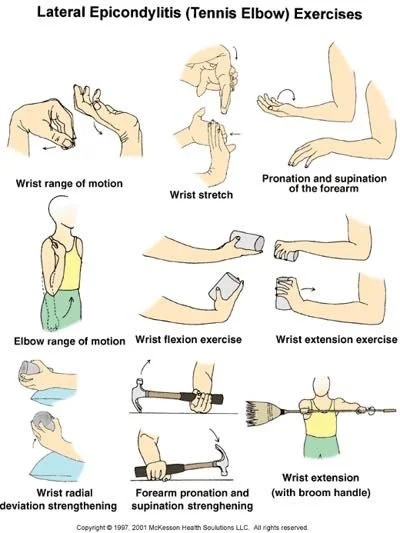
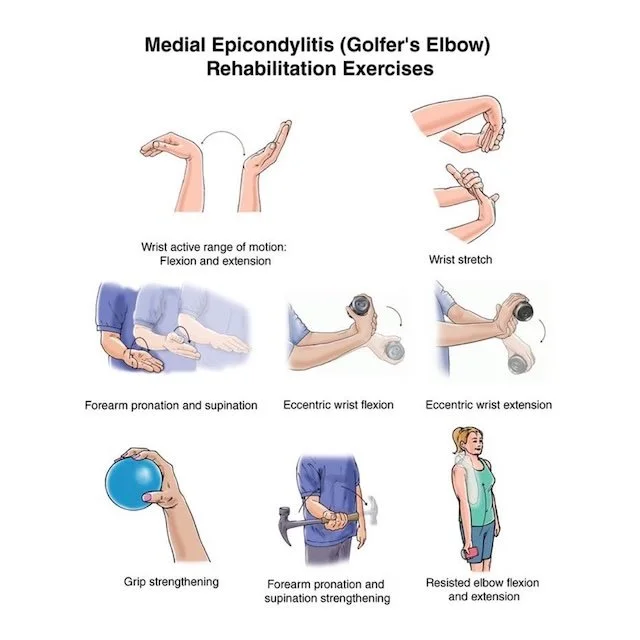
- Gentle stretching and exercises to build strength back (seek professional guidance for specific exercises based on your individual requirements and stage of rehabilitation)
See image below for some basic level exercises and stretches for epicondylitis